Material Processing
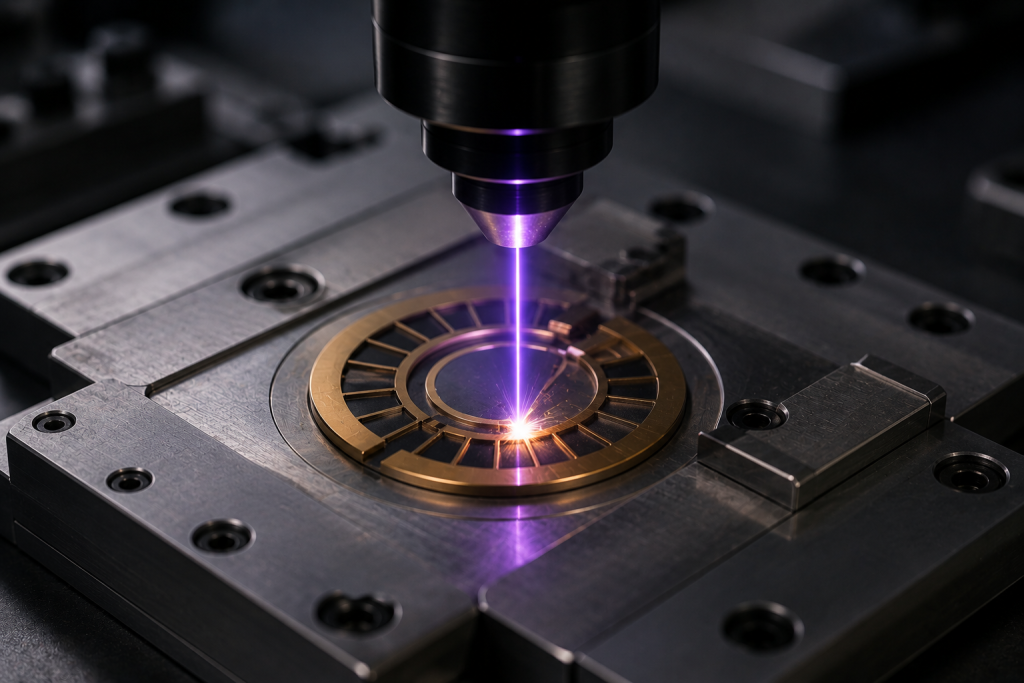
Flashlamp-pumped solid-state lasers are well suited for materials processing applications that require high pulse energy, high peak power, and precise delivery of optical energy. By controlling wavelength, pulse energy, pulse duration, repetition rate, and spot size, laser energy can be used to selectively heat, melt, vaporize, or ablate material.
Laser Ablation
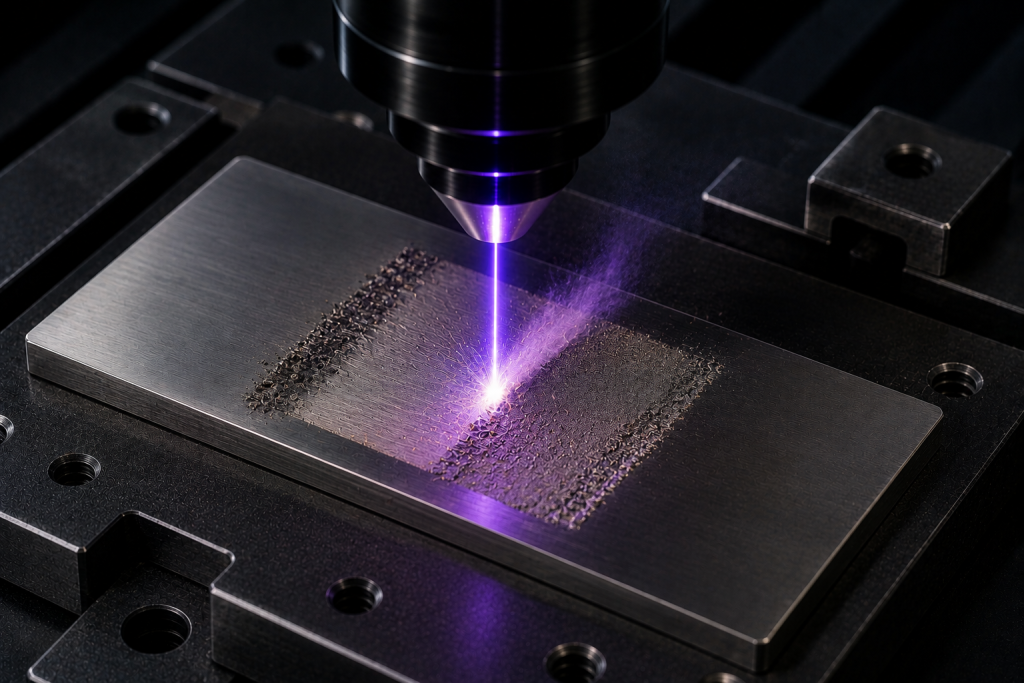
Laser ablation uses concentrated laser energy to remove material from a surface through rapid heating, vaporization, or other laser–material interactions. High-peak-power pulses can remove small amounts of material while limiting the amount of energy transferred to the surrounding area. Flashlamp-pumped solid-state lasers are particularly useful when relatively high pulse energies are required for material removal, cleaning, sample preparation, coating removal, and specialized manufacturing processes.
Mask Ablation
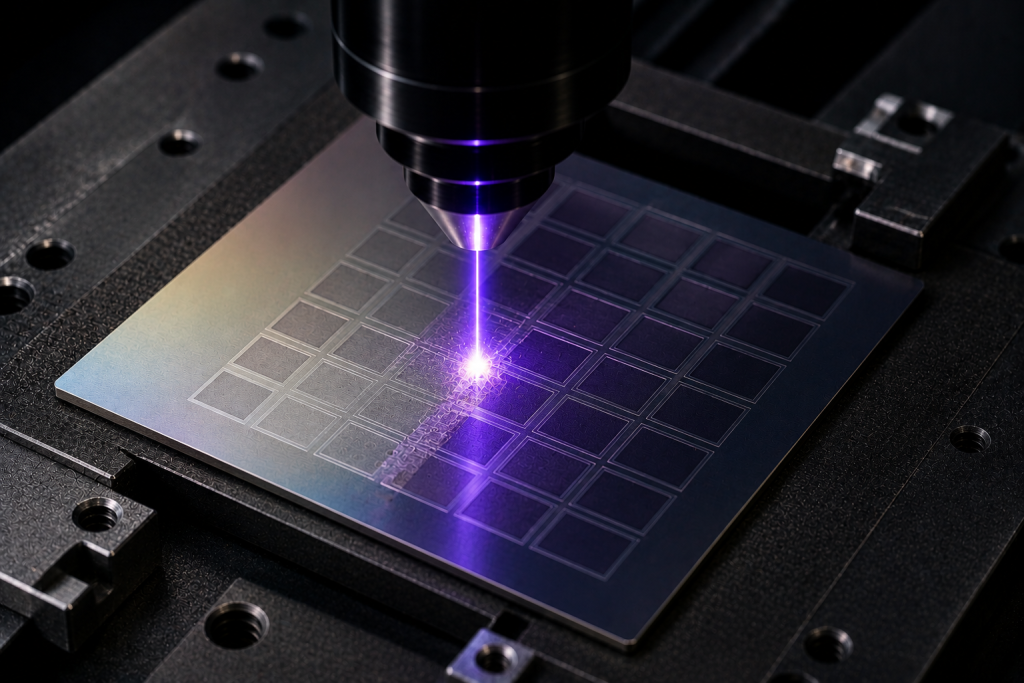
Mask ablation uses a patterned mask in combination with a pulsed laser to selectively remove material and transfer a defined pattern onto a workpiece. The laser illuminates the desired mask geometry, which is projected or imaged onto the target surface to produce repeatable features without mechanically contacting the material. High-energy solid-state lasers can support mask-based processing of coatings, thin films, electronic materials, and other components requiring controlled patterning over precisely defined areas.
PCB Repair
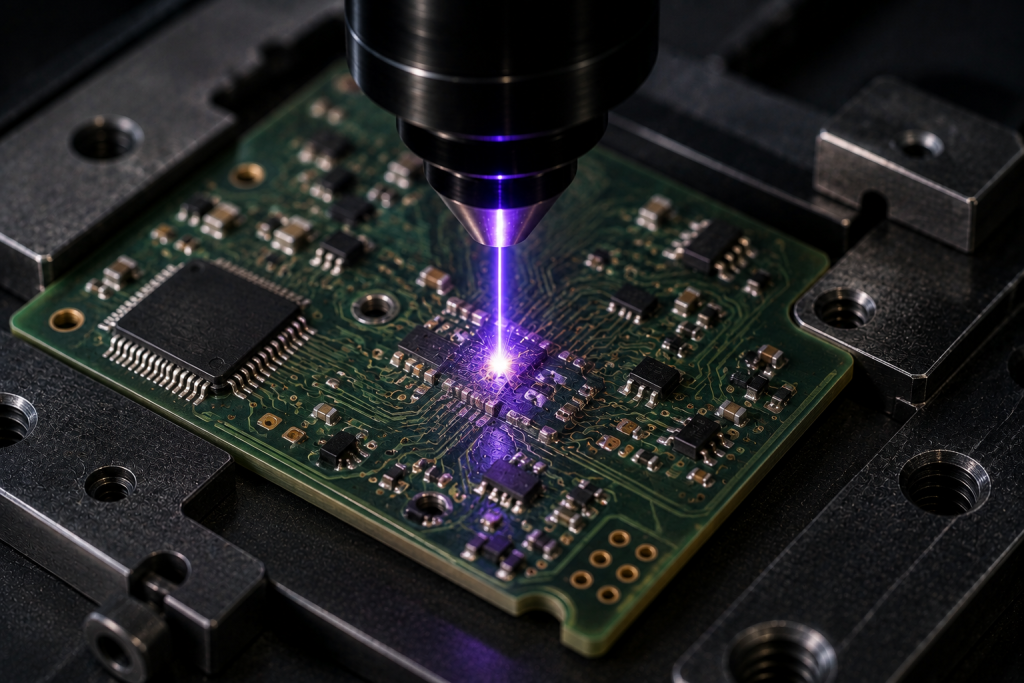
Pulsed solid-state lasers can be used for precision printed circuit board (PCB) repair and modification, where small amounts of conductive or insulating material must be selectively removed. A tightly focused beam allows individual traces, pads, coatings, or other features to be modified while minimizing effects on neighboring circuitry. Laser processing can support circuit rework, trace isolation, coating removal, failure analysis, prototyping, and modification of densely populated electronic assemblies.
Laser Drilling
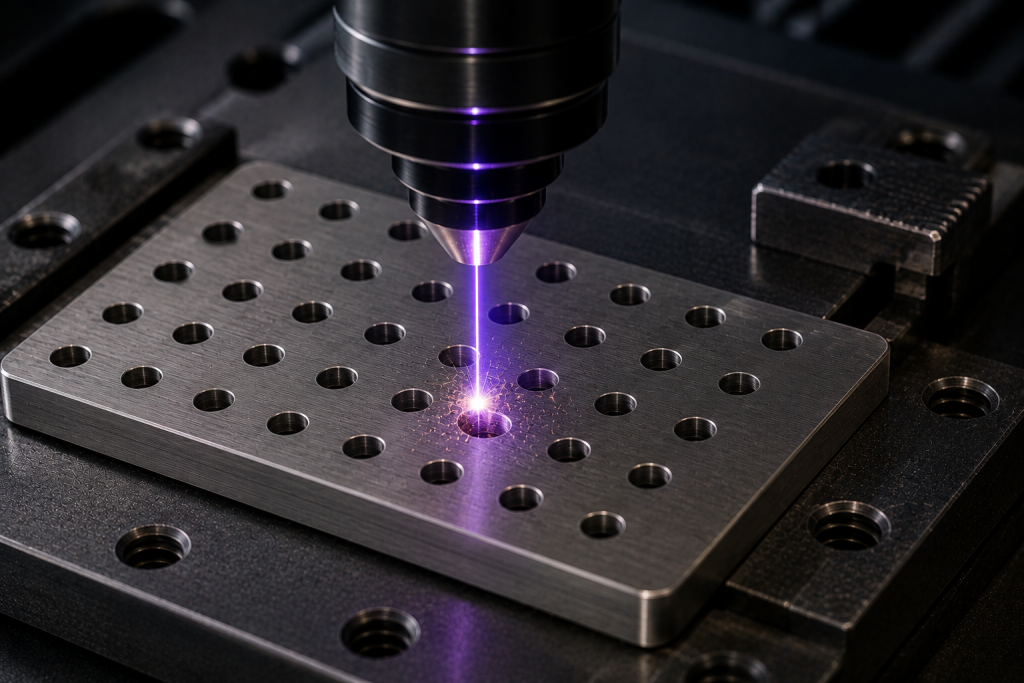
Laser drilling uses focused, high-energy laser pulses to rapidly melt and vaporize material, producing holes without physical contact between a cutting tool and the workpiece. Flashlamp-pumped solid-state lasers can generate the high pulse energies and peak powers needed to drill metals, ceramics, and other difficult-to-machine materials. Applications include precision apertures, cooling holes, micro-holes, and specialized components used in aerospace, electronics, medical devices, and industrial manufacturing.
Micromachining
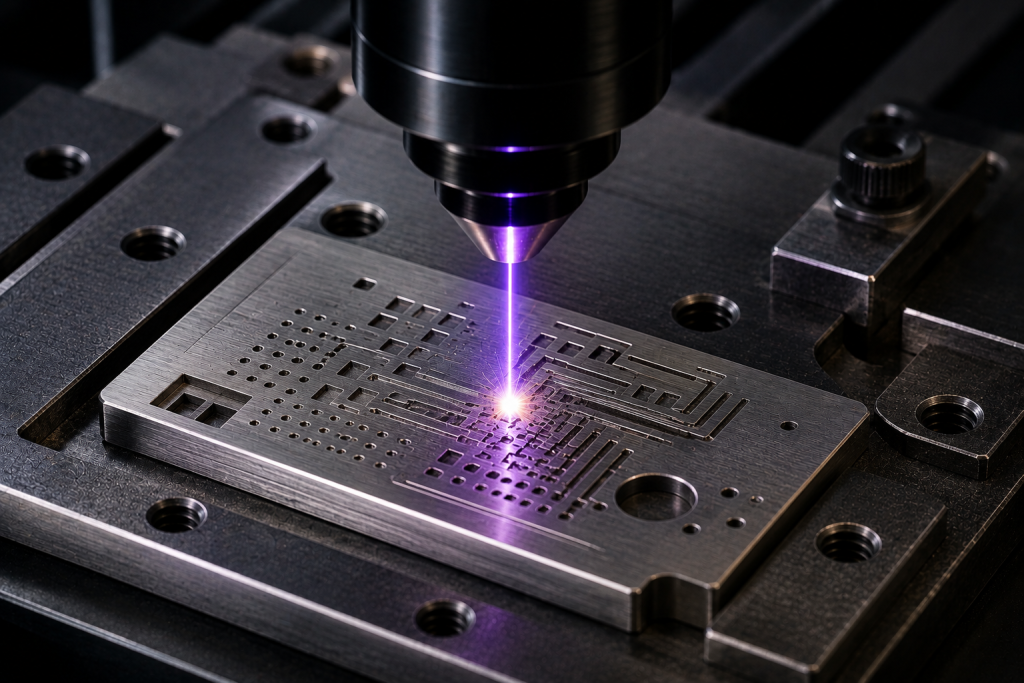
Laser micromachining uses a tightly focused beam to create small and highly controlled features in a workpiece. Pulsed solid-state lasers can be used for micro-drilling, cutting, scribing, grooving, patterning, and selective material removal where conventional machining techniques may be impractical. The non-contact nature of laser processing also reduces mechanical forces on delicate or miniature components, making it useful for electronics, instrumentation, medical devices, and precision manufacturing.
Surface Modification
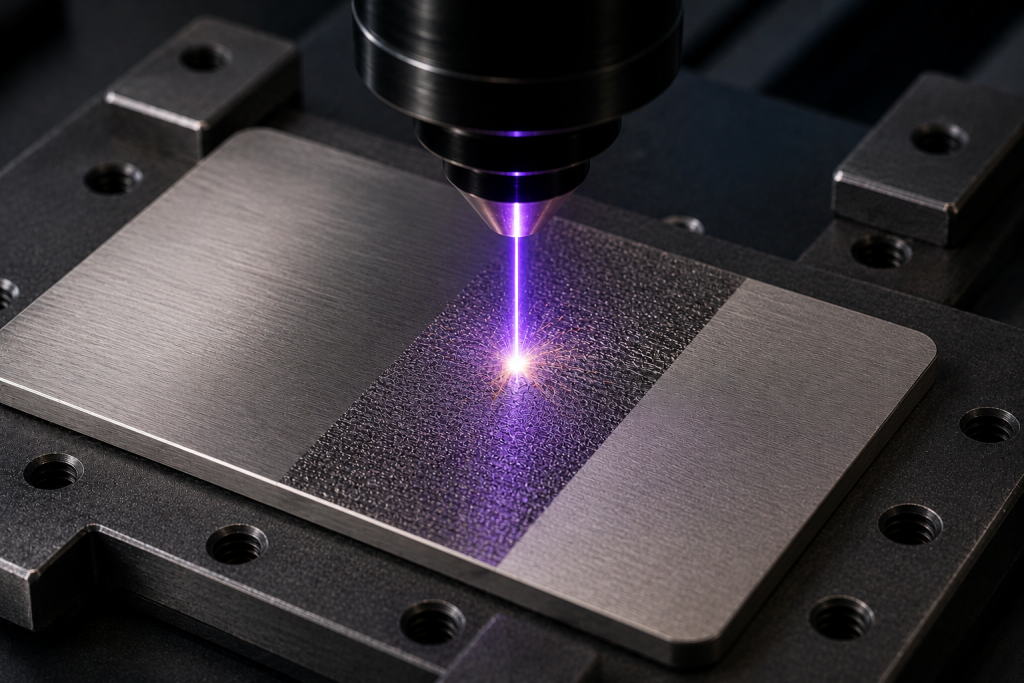
Laser surface modification uses controlled optical energy to alter the physical, chemical, or structural characteristics of a material’s surface without necessarily processing the entire component. Depending on the material and laser parameters, the process can produce localized heating, texturing, hardening, cleaning, or changes in surface morphology. Pulsed solid-state lasers provide precise control over where energy is deposited, making them useful for specialized surface engineering and research applications.
Laser Engraving
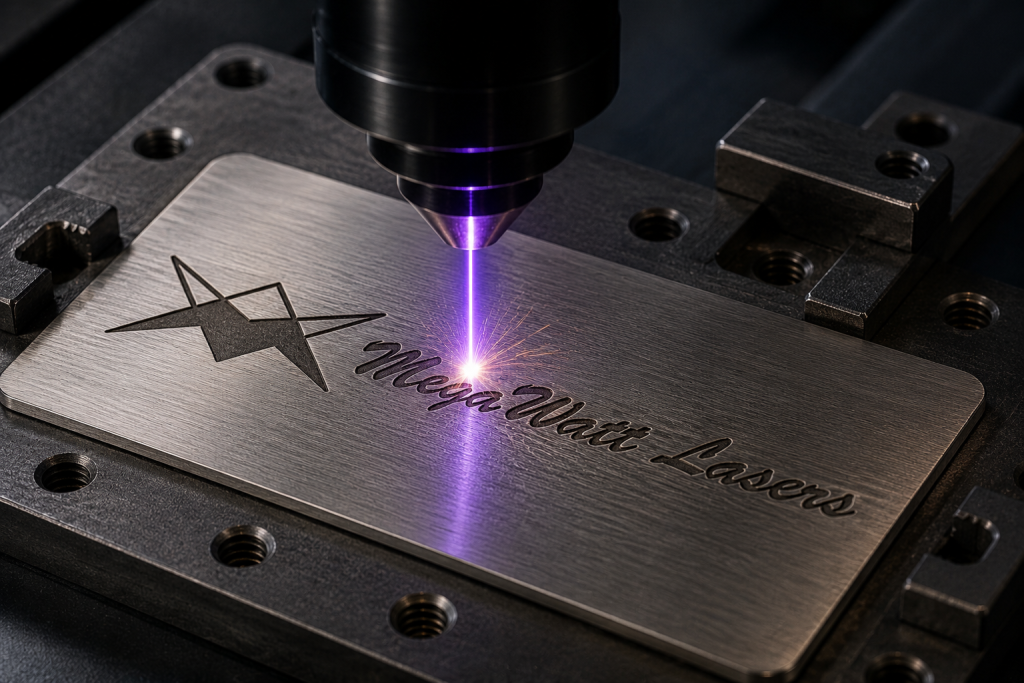
Laser engraving permanently marks a material by selectively removing or modifying its surface with a focused laser beam. Pulsed solid-state lasers can create fine text, identification codes, serial numbers, graphics, scales, and other permanent features on metals and a variety of other materials. Because the process is digitally controlled and non-contact, it can produce highly repeatable markings while eliminating mechanical tool wear.
Material Trimming
Laser trimming precisely removes small amounts of material to adjust the dimensions, geometry, or performance of a component. In electronics, for example, laser trimming can be used to modify resistive or other functional elements until a desired electrical value is achieved. In mechanical and optical applications, the same principle can be used for precise dimensional correction or selective material removal. Pulsed solid-state lasers provide the fine control and repeatability required for applications where very small changes in a component can significantly affect its final performance.